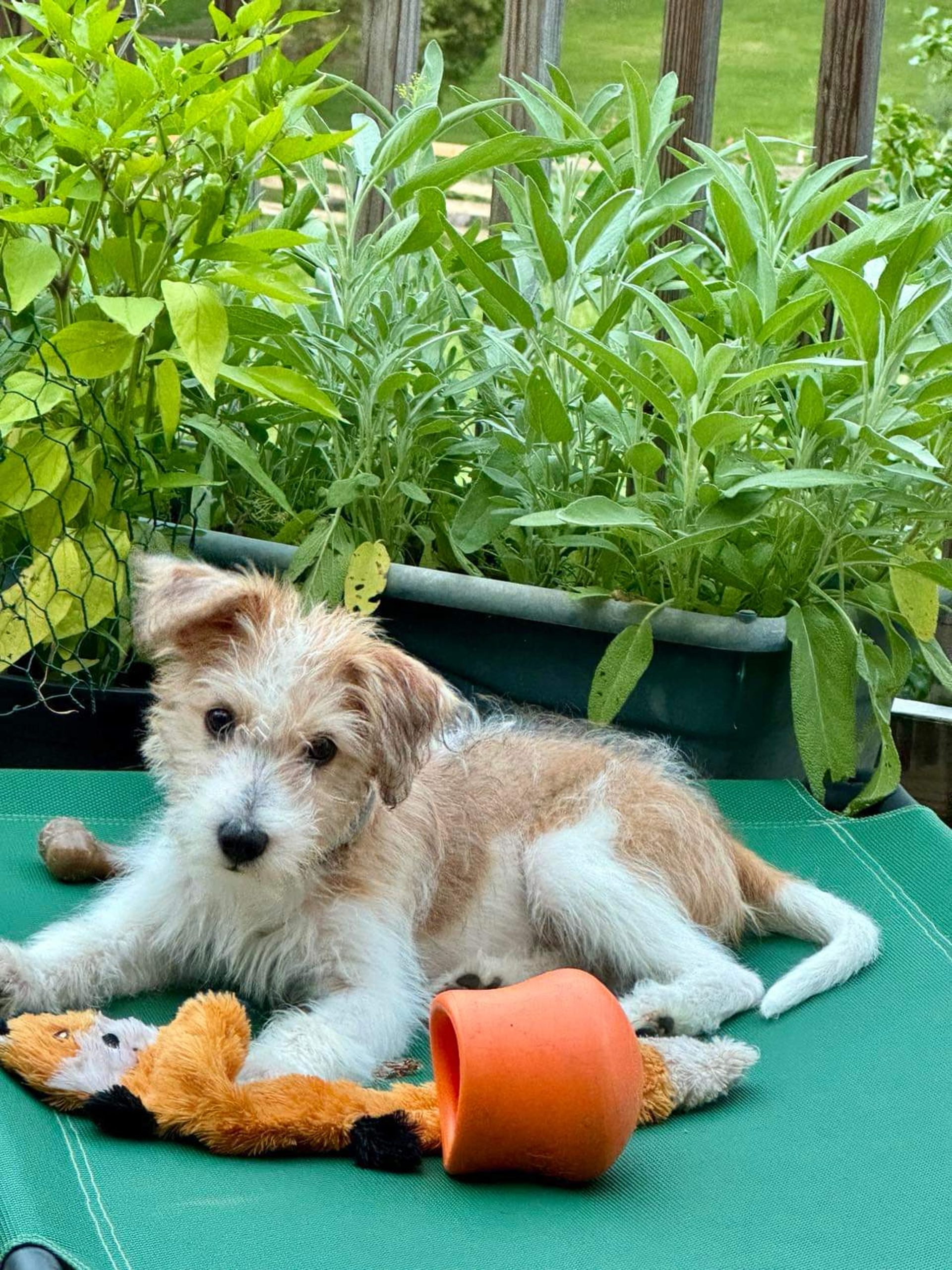
About the Breed
The Kromfohrlander is a medium-sized companion breed that is sensitive, loving and loyal to its owners. He has a distinctive ‘smile’ and will sneeze to greet you. Pronunciation of the breed is “krome-for-lahn-dair.”
The Kromfohrlander is a very intelligent, funny, agile dog which loves to climb and jump and easily excels at agility and dog-trick training but can be fussy with food. They come in two coat types: wirehaired (with beard) and smooth haired (smooth face with no beard and beautiful, long, soft hair). The breed’s nickname in North America is “Kromi” (krome-ee). The Kromfohrlander was bred to be a companion only, retains very little hunting instinct (despite its terrier heritage), and is often long-lived (17-18 years old). He is good with children and family and tends to be a one-person dog. He is very attached to his owner, will not run away, and is first to alert to strangers.
While WWII had taken a toll on many breeds throughout Europe, one dog breed got its start due to the war. Throughout France and Germany, many dog-breeding kennels had been decimated or abandoned. Instead of evacuees taking their dogs with them, many were turned out, left to scavenge and perpetuate on their own. In 1945, a scruffy dog dubbed “Peter” became the mascot for an American troop of soldiers. Peter accompanied the soldiers from Northern France into the Westphalia region of Germany. Due to his origins, the little dog was believed to have been of White Terrier and Griffon descent, although nothing more about his pedigree is known.
Once in Germany, the little dog was separated from his troop, but luckily he found a friend in a local woman by the name of Isle Schleifenbaum. She was delighted by Peter and adopted him as her own companion. He sired a litter of puppies with a local terrier female named Fifi. The puppies inherited their sire’s charm and became a favorite in the region. From this breeding, the Kromfohrlander breed was started. Isle was able to get the breed recognized by the German Kennel Club within just 10 short years, and the FCI awarded recognition shortly after. The name Kromfohrlander comes from the district that Isle lived near, Krom Fohr, which is German for Crooked Furrow. Since the breed’s acceptance into the German Kennel Club in 1955, the Kromfohrlander breed’s popularity spread throughout his country, followed shortly by surrounding countries. The first Kromis made their way into the United States in the early 1990s, where they enjoy a small but growing following.